Editor’s Note: This is the second of a two-part series exploring the influences, inspirations and future of Black culture on jewelry design. See part one, a Q&A with Dorian Webb, an acclaimed jeweler and designer who founded her own business.
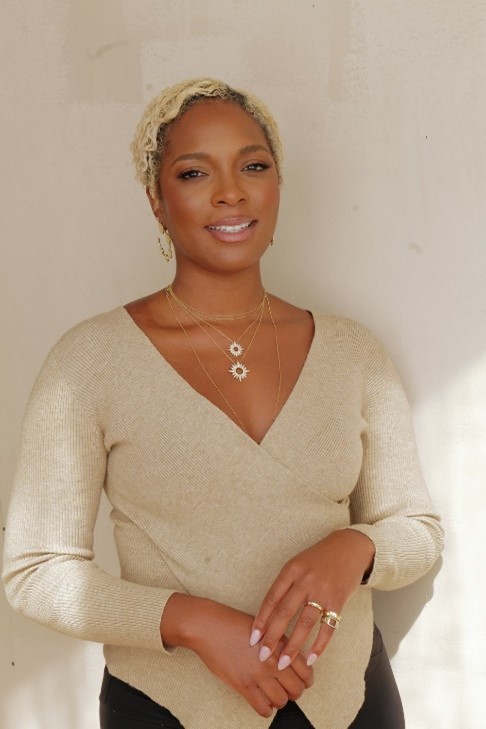 At its core, jewelry expresses something. Each ring, necklace, bracelet, brooch or piercing holds meaning for the person who wears it, the person who designed it and those who look upon it.
For Black communities, jewelry’s meaning runs deep. Throughout history, jewelry has served as a powerful symbol of cultural identity, resilience, and self-expression. As we celebrate Black History Month, we’re examining the profound influence of Black culture on jewelry design, what it means for today’s consumer and the roadmap toward a more inclusive, diverse jewelry industry.
We caught up with Malyia McNaughton, Founder and CEO of Made by Malyia and Co-Founder and current Board President of the Black In Jewelry Coalition (BIJC), to learn what influences her work and how she defines a more inclusive jewelry industry. Malyia also shared her perspective on the innumerable ways Black values, traditions, and narratives are woven into the art of jewelry design.
Q: How does Black culture and heritage influence your designs?
Malyia: I wear a daily reminder of the brightness and vibrancy of Black culture thanks to my Caribbean heritage. My parents are from Jamaica and my siblings and I are the first generation to be born in the U.S. In Jamaica, receiving a bangle as a young girl is a rite of passage. Typically, your aunt or mom gives you one around the age of five as a sign of your cultural heritage and identity. When I received my bangle, I remember immediately feeling included in that larger conversation.
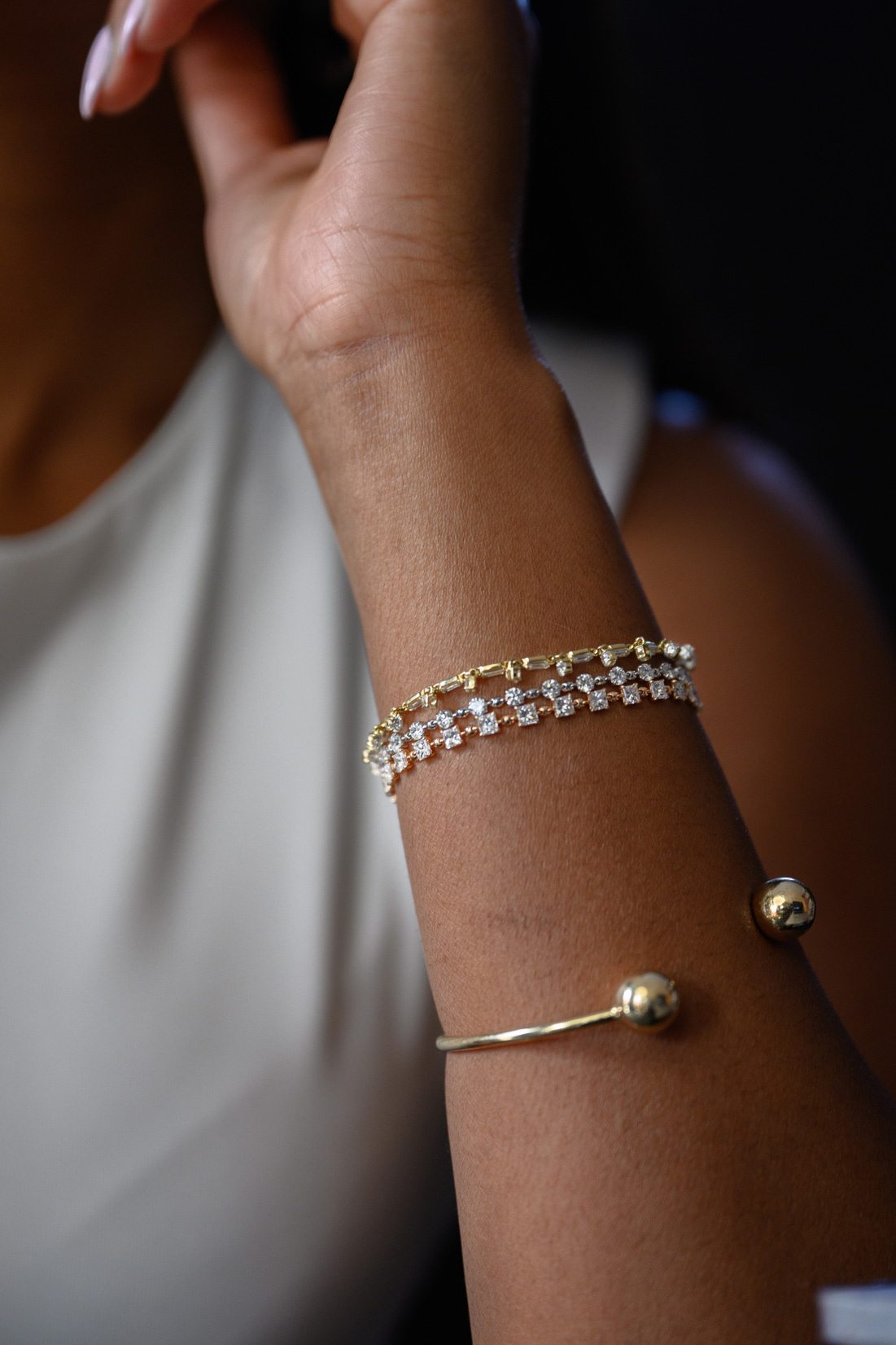 I still wear my bangle every day as a consistent reminder of how craftsmanship transcends time. I try to bring that into my designs.
Self-expression is so important in Black culture. When you adorn yourself, you’re letting others know, “This is my unique expression of how I want to be viewed.” As I sought jewelry to express myself, I kept coming up short using others’ designs. So, I pursued design to tap into my self-expression more fully. My motto is “Shine so bright, that the sun feels like the shade.” That’s the feeling I want my jewelry to bestow: no matter how small the piece may be, it still makes a statement because that’s how you decided to show up today.
Q: As an artist who designs jewelry, what makes jewelry a unique format to design for?
Malyia: Jewelry takes on new life when the wearer puts it on. I may create a piece inspired by a wave or the ocean, and then it takes on new life once it’s worn by someone else. The wearer may connect it with a memory or trip they had to the ocean, or a ripple they remember. I see jewelry at the intersection of art and nature.
Jewelry also allows people to co-create and marry people’s experiences together. Working with Tierra Whack in 2022 was one of my favorite opportunities, collaborating with another artist who expresses herself through music. It allowed me to merge her traditions, heritage, and inspiration with my creative expression – all while making the pieces broad enough to impact wearers through a national retailer like Banter by Piercing Pagoda.
Q: What’s your advice for young people – especially aspiring Black designers/artists – interested in jewelry as a career path?
Malyia: This is such a timely question. Last week, the Black in Jewelry Coalition (BIJC) launched our education initiative at the Brooklyn STEAM Center. The program introduces 11th and 12th graders to jewelry design, handling gems, working as a bench jeweler, and more. The program exposes youth to a career in jewelry at an earlier age – not only from a retail standpoint but from a well-rounded perspective.
The reason the program came together is because BIJC recognized there’s a gap in the next generation seeing jewelry as a possible career. I see this when I look back at my experience. Had I known jewelry was a viable career path, I would have selected it because it encapsulates everything my creative brain was looking for.
In our conversations with students so far, it’s clear there’s a need for more exposure to jewelry as a career and beyond just a hobby. I want to be part of making that a reality.
Q: What does the future hold for jewelry design, and especially how Black culture, values, and leadership will play a pivotal role?
Malyia: Everyone with a stake in our industry can play a role in ensuring that visibility and representation are a mainstay - not a performative level of inclusion. For me, it’s about being involved in the action plan for the future. What I hope BIJC does is that we give people a platform to share their creative expression.
Venture capitalism is another area of opportunity. There is no lack of talent in terms of Black-owned jewelry businesses and designers, but a lack of inclusivity for funding. It starts with representation – going beyond seeing funding as a “donation” and viewing it as empowerment.
Black, women-owned and Black-owned businesses are mostly self-funded. This shows we have the ability to start successful businesses and grow them. The next step is more visibility and access to capital to ensure those businesses have financial viability over long periods of time.
We invite you to see more of Malyia's beautiful jewelry on her website.
Design innovation and inclusivity are at the heart of how we Inspire Love for All at Signet and bring consumer-inspired designs to life.
We do this in several ways, including co-developing Black, Indigenous and People of Color (BIPOC) creative designers and talent through scholarship, mentoring, and business development. Learn more in our Corporate Sustainability Goals.